Industry-Specific Models: Practical Use Cases with Real-World Examples
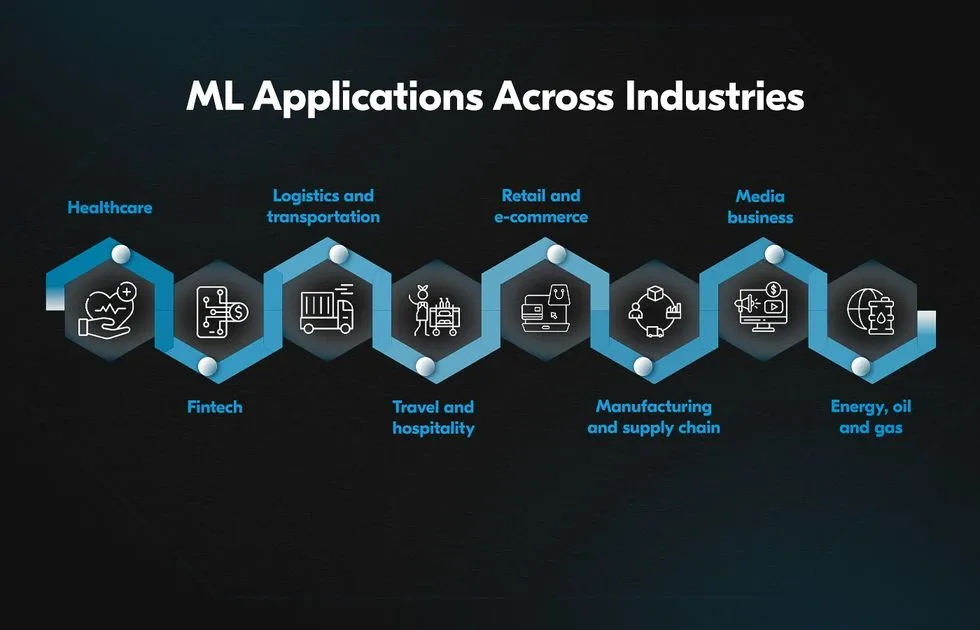
From diagnostic imaging to fraud detection, AI models tailored to specific industries are delivering measurable results. Here's how.
The Shift from General to Specialized
General-purpose AI models like GPT and BERT revolutionized what's possible with machine learning. But industries with specialized terminology, regulatory requirements, and domain-specific data patterns have discovered something important:
Industry-specific models outperform generalists when the domain is well-defined.
Why? Because healthcare language isn't retail language. Financial fraud patterns don't look like manufacturing defects. And the cost of a wrong prediction varies dramatically across sectors.
Let's explore how four major industries are putting specialized AI to work.
Healthcare: From Diagnosis to Drug Discovery
Healthcare AI isn't a future promise—it's already in production. Here are the key use cases:
1. Diagnostic Imaging Analysis
AI models trained on millions of medical images now match or exceed radiologist performance for specific conditions:
| Use Case | Example |
|---|---|
| Cancer detection | Analyzing mammograms for breast cancer biomarkers |
| Retinal disease | Detecting diabetic retinopathy from fundus photographs |
| Pneumonia identification | Analyzing chest X-rays for COVID-19 and bacterial pneumonia |
| Cardiac assessment | Identifying heart attack indicators from ECG patterns |
Real-World Example: Google Health's DeepMind developed an AI system that can detect over 50 eye diseases from retinal scans with accuracy comparable to expert ophthalmologists.
2. Drug Discovery Acceleration
Traditional drug development takes 10-15 years and costs billions. AI is compressing this timeline:
flowchart LR
    A[Target Identification] --> B[Molecule Design]
    B --> C[Efficacy Prediction]
    C --> D[Clinical Trial Optimization]
    D --> E[Faster Time-to-Market]
AI models can:
- Predict how new molecules interact with human proteins
- Simulate side effects before human trials
- Identify promising candidates from millions of compounds
Real-World Example: Insilico Medicine used AI to design a novel drug candidate for fibrosis in just 18 months—a process that typically takes 4-5 years.
3. Remote Patient Monitoring
Wearables combined with AI create continuous health surveillance:
- Arrhythmia detection from smartwatch data
- Fall prediction for elderly patients
- Mental health indicators from voice pattern analysis
Finance: Security, Speed, and Personalization
Financial services have embraced AI for three core reasons: protecting assets, processing speed, and customer experience.
1. Fraud Detection at Scale
Every credit card transaction runs through ML models that have learned what "normal" looks like for each customer:
Transaction Pattern Analysis:
├── Location anomaly (purchase in country you've never visited)
├── Amount anomaly (unusually large purchase)
├── Velocity anomaly (many purchases in short timeframe)
├── Merchant category mismatch
└── Device fingerprint changes
Real-World Example: PayPal's AI systems analyze millions of transactions in real-time, reducing fraud losses while minimizing false positives that frustrate legitimate customers.
2. Credit Scoring 2.0
Traditional credit scores use limited data points. AI-powered alternatives analyze:
- Transaction history patterns
- Banking behavior (how often you check balances)
- Bill payment consistency
- Employment stability indicators
Impact: More accurate risk assessment means better rates for creditworthy borrowers and reduced defaults for lenders.
3. Algorithmic Trading
Hedge funds and investment banks deploy AI for:
| Application | What It Does |
|---|---|
| Pattern recognition | Identifies market trends invisible to human traders |
| Sentiment analysis | Processes news and social media in milliseconds |
| Portfolio optimization | Balances risk/reward across thousands of instruments |
| Execution optimization | Splits large orders to minimize market impact |
Real-World Example: BlackRock's Aladdin platform manages over $21 trillion in assets, using AI for risk analysis, portfolio management, and trading decisions.
Manufacturing: Prediction, Quality, and Optimization
Manufacturing has one of the clearest ROI stories for AI: prevent downtime, reduce defects, optimize throughput.
1. Predictive Maintenance
The value proposition is simple: replace parts before they fail, not after.
flowchart TB
    A[Sensor Data<br/>vibration, temperature, pressure] --> B[AI Model]
    B --> C{Failure Risk?}
    C -->|High| D[Schedule Maintenance]
    C -->|Low| E[Continue Operation]
    D --> F[Prevent Unplanned Downtime]
AI models detect early warning signs humans miss:
- Subtle vibration changes in bearings
- Temperature drift patterns
- Acoustic signatures of wear
Real-World Example: BMW uses AI predictive maintenance on assembly lines, reducing unplanned downtime by up to 25% and extending equipment lifespan.
2. Automated Quality Control
Computer vision has transformed quality inspection:
- Speed: AI inspects 100% of products vs. human sampling
- Consistency: No fatigue, no subjective variation
- Precision: Detects defects invisible to naked eye
Applications:
- Surface defect detection on metal parts
- Weld quality assessment
- Component alignment verification
- Color consistency checks
Real-World Example: Tesla's Gigafactories use AI-powered cameras to inspect battery cells, identifying microscopic defects that could cause failures.
3. Supply Chain Optimization
AI helps manufacturers answer critical questions:
- How much inventory should we hold at each location?
- Which supplier is most likely to delay?
- What's the optimal production schedule given current constraints?
Real-World Example: Walmart uses AI to predict demand fluctuations and optimize inventory across 10,000+ stores, reducing waste while maintaining availability.
Retail: Personalization at Scale
Retail AI might be the most visible to consumers—it powers the "you might also like" recommendations you see every day.
1. Hyper-Personalized Recommendations
Modern recommendation engines go far beyond "customers who bought X also bought Y":
Personalization Signals:
├── Browse history and dwell time
├── Search queries
├── Purchase history
├── Cart abandonment patterns
├── Device and time-of-day context
├── External factors (weather, events, trends)
└── Predicted life events (moving, new baby, etc.)
Real-World Example: Netflix estimates its recommendation engine saves $1 billion annually in reduced customer churn by keeping users engaged with relevant content.
2. Dynamic Pricing
AI-powered pricing adjusts in real-time based on:
- Competitor pricing
- Inventory levels
- Demand signals
- Time-of-day patterns
- Customer willingness-to-pay
Real-World Example: Amazon changes prices millions of times per day, optimizing revenue while remaining competitive.
3. Visual Search and Try-On
AI bridges the physical-digital gap:
- Visual search: Take a photo of a product, find it online
- Virtual try-on: See how clothes or makeup look on you
- Size prediction: Reduce returns with accurate fit recommendations
Real-World Example: Sephora's Virtual Artist app uses AR and AI to let customers try on makeup virtually, increasing conversion rates for featured products.
Building Industry-Specific Models: Key Considerations
If you're developing or deploying specialized AI, here are the critical factors:
1. Domain Expertise is Non-Negotiable
Generic ML Engineer + Generic Data → Generic Results
Domain Expert + Labeled Data + ML Engineer → Specialized Model
You need people who understand:
- Industry terminology and edge cases
- Regulatory requirements (HIPAA, PCI-DSS, etc.)
- What "correct" actually means in this context
2. Data Quality Trumps Quantity
| Approach | Outcome |
|---|---|
| 1M noisy samples | Mediocre model that fails on edge cases |
| 100K clean, labeled samples | Production-ready model with known limits |
3. Explainability Matters
In regulated industries, "the model said so" isn't acceptable:
- Healthcare: Clinicians need to understand why a diagnosis is suggested
- Finance: Regulators require audit trails for credit decisions
- Manufacturing: Engineers need to validate maintenance recommendations
4. Continuous Learning is Essential
Industry patterns evolve:
- Fraud tactics change
- New diseases emerge
- Market conditions shift
- Customer preferences evolve
Your model deployment pipeline needs mechanisms for:
- Performance monitoring
- Drift detection
- Retraining triggers
- A/B testing new versions
Getting Started with Industry AI
Whether you're exploring AI for your industry or evaluating vendor solutions, here's a practical framework:
Step 1: Identify High-Value Use Cases
Focus on problems where:
- Human decisions are expensive or slow
- Patterns exist but are complex
- The cost of errors is quantifiable
- Data is available (even if not perfect)
Step 2: Start with Proven Patterns
Don't reinvent from scratch. Look for:
- Pre-trained industry models (medical imaging, financial NLP)
- Transfer learning opportunities
- Vendor solutions with your industry focus
Step 3: Build Feedback Loops
The first model is just the starting point:
flowchart LR
    A[Deploy Model] --> B[Collect Predictions]
    B --> C[Gather Feedback]
    C --> D[Identify Errors]
    D --> E[Retrain & Improve]
    E --> A
Step 4: Measure Business Impact
Track metrics that matter to the business:
- Healthcare: Diagnostic accuracy, time-to-diagnosis
- Finance: Fraud prevented, false positive rate
- Manufacturing: Downtime reduced, defects caught
- Retail: Conversion lift, return rate reduction
Final Thoughts
Industry-specific AI models aren't a nice-to-have—they're becoming table stakes for competitive organizations. The examples above aren't research projects; they're production systems generating real value today.
The key insight? Specialization beats generalization when the domain is well-understood and the stakes are high.
Start with a clear use case, invest in domain expertise, and build the feedback loops that turn a first model into a learning system that improves over time.